
IoT Trends 2025 – The Internet of Things (IoT) is no longer a future technology—it’s now at the center of business transformation across industries. From manufacturing to healthcare, retail to agriculture, IoT is reshaping operations, improving efficiency, and unlocking new streams of revenue. But in 2025, we’re seeing a new phase: smarter deployments, tighter integration with AI, and a stronger focus on security and ROI.
From Data Collection to Intelligent Decision Making
In the early days, businesses primarily used IoT to collect data. Sensors tracked movement, temperature, usage, and other metrics. But what’s changed in 2025 is how that data is being used. With advances in artificial intelligence and edge computing, IoT systems can now make real-time decisions.
Take logistics, for instance. A fleet management system equipped with IoT sensors and edge AI can reroute trucks automatically in response to weather or traffic, ensuring on-time delivery and fuel savings. It’s no longer about just gathering data—it’s about acting on it immediately.
Industrial IoT: Smarter, Safer, Leaner
Manufacturers have been quick to embrace Industrial IoT (IIoT), and for good reason. Connected machines now predict when a part will fail, schedule maintenance before downtime occurs, and even reorder supplies automatically. Predictive maintenance is becoming the norm.
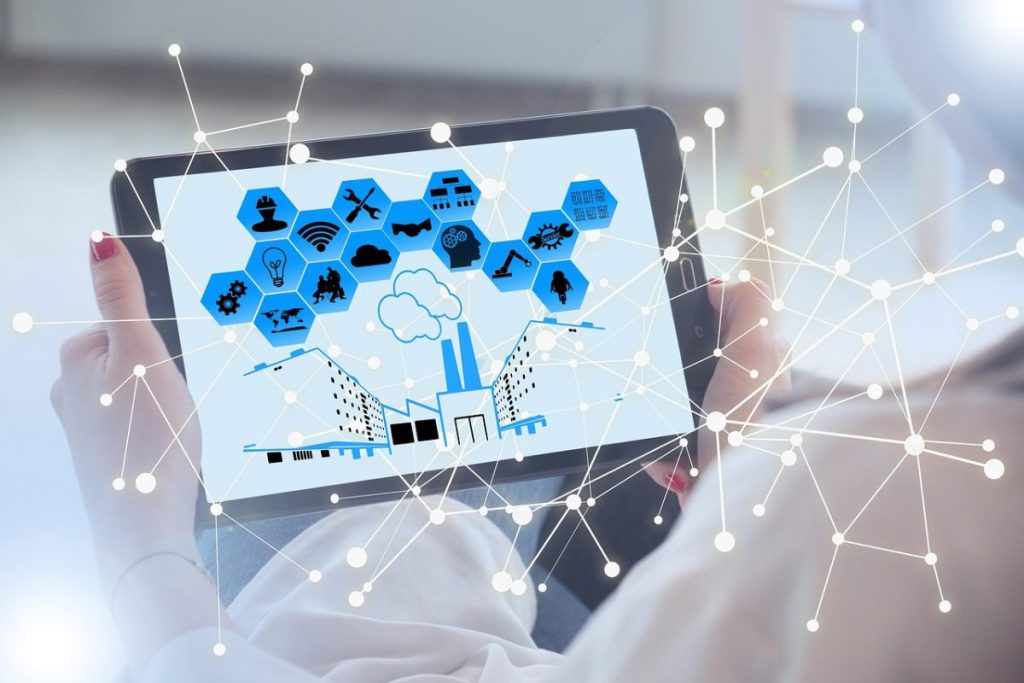
In addition to efficiency, safety has improved. Wearables on workers can detect fatigue or unsafe conditions, instantly alerting supervisors or triggering automatic shutdowns of equipment.
Retail Reimagined
Brick-and-mortar retail isn’t dead—it’s just getting smarter. In 2025, retailers use IoT to optimize inventory, personalize customer experiences, and improve checkout. RFID tags, smart shelves, and customer tracking systems create a seamless shopping journey.
Imagine walking into a store where your loyalty app triggers a digital assistant to suggest products based on your past purchases. Or a shelf that notifies the stockroom when an item is running low. That’s the new face of physical retail.
Agriculture Gets a Digital Upgrade
Farming has gone high-tech. IoT-enabled soil sensors, weather stations, and automated irrigation systems allow farmers to monitor and adjust growing conditions in real time. The result? Higher yields, less waste, and more sustainable practices.
[linkpreview]https://kontranet.com/iot-industry-trends/iot-in-agriculture-revolutionizing-farming-practices/[/linkpreview]
What’s more, drones equipped with imaging sensors now scan fields for pests or disease, and autonomous tractors follow precise GPS coordinates to plant or harvest crops.
Enhanced Customer Insights
Businesses that use IoT not only optimize operations but also learn more about their customers. Connected devices—like smart appliances, vehicles, or fitness trackers—send data back to companies that use it to tailor marketing, product design, and support services.
This feedback loop allows for more personalized, responsive customer experiences. And in 2025, consumers increasingly expect that level of personalization.
Tackling Security and Data Privacy
With all this connectivity, security can’t be an afterthought. In 2025, businesses are investing heavily in IoT security frameworks, encrypted data pipelines, and device authentication. New regulations in many regions now require companies to demonstrate how they protect consumer data.
Fortunately, the rise of secure device identity management and network segmentation tools has made it easier to protect IoT ecosystems. And companies that do this well are building trust—and gaining a competitive edge.
Bottom Line Benefits
IoT isn’t just a tech upgrade—it’s a business strategy. In 2025, companies that embrace IoT see measurable improvements: reduced operational costs, faster decision-making, new revenue opportunities, and greater customer satisfaction.
And as IoT continues to evolve—especially in conjunction with AI, 5G, and blockchain—we’ll see even more advanced use cases. Businesses that get in now are positioning themselves for long-term success.
Final Thought
The Internet of Things is no longer about experimentation. It’s about execution. In 2025, the businesses thriving are the ones that have moved beyond pilots and prototypes to scalable, intelligent deployments. They’re not just connected—they’re transformed.
- AI Home Companion Robots Are Here: What CES 2026 Revealed About Your Future Living Room
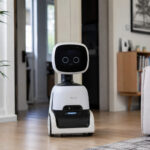
 AI home companion robots stopped being a sci-fi punchline this year. At CES 2026 in Las Vegas, LG showed off a robot with two arms and five-fingered hands folding laundry on stage. Samsung unveiled a full ecosystem of appliances it’s now calling “home companions” instead of appliances. And a startup founded by the co-creator of…
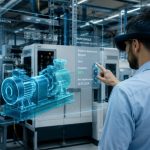
 - Digital Twins Explained: The Technology That Creates a Living Copy of EverythingDigital twins explained in one sentence: a digital twin is a living, continuously updated virtual replica of a real physical object, system, or process — connected to its real-world counterpart through sensors and data, updating in real time as the physical version changes. That definition is accurate, but it doesn’t quite capture why this technology…
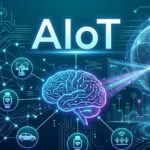
- AIoT: What Happens When Your Smart Home Gets a BrainYour smart thermostat already knows your schedule. Your robot vacuum already maps your floor plan. Your doorbell camera already distinguishes between a person, a car, and a squirrel. None of this is new. What’s new is what happens next — when these devices stop just collecting data and start genuinely thinking about it. That’s the…
- Internet of Everything in simple termsFor years, the term Internet of Things (IoT) has been used to describe a world where everyday devices connect to the internet. Smart thermostats, connected cars, wearable health trackers, and industrial sensors are all examples of this growing digital ecosystem. But technology has moved a step further. Today, experts are increasingly talking about something bigger:…
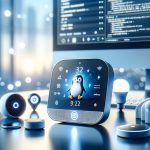
- The Role of Linux in IoT: Powering the Connected WorldThe Internet of Things (IoT) is everywhere—from smart homes and wearable devices to industrial automation and self-driving cars. Behind the scenes, one operating system plays a surprisingly dominant role: Linux. Known for its stability, flexibility, and open-source nature, Linux has become the backbone of countless IoT devices and platforms. But what makes Linux so well-suited…