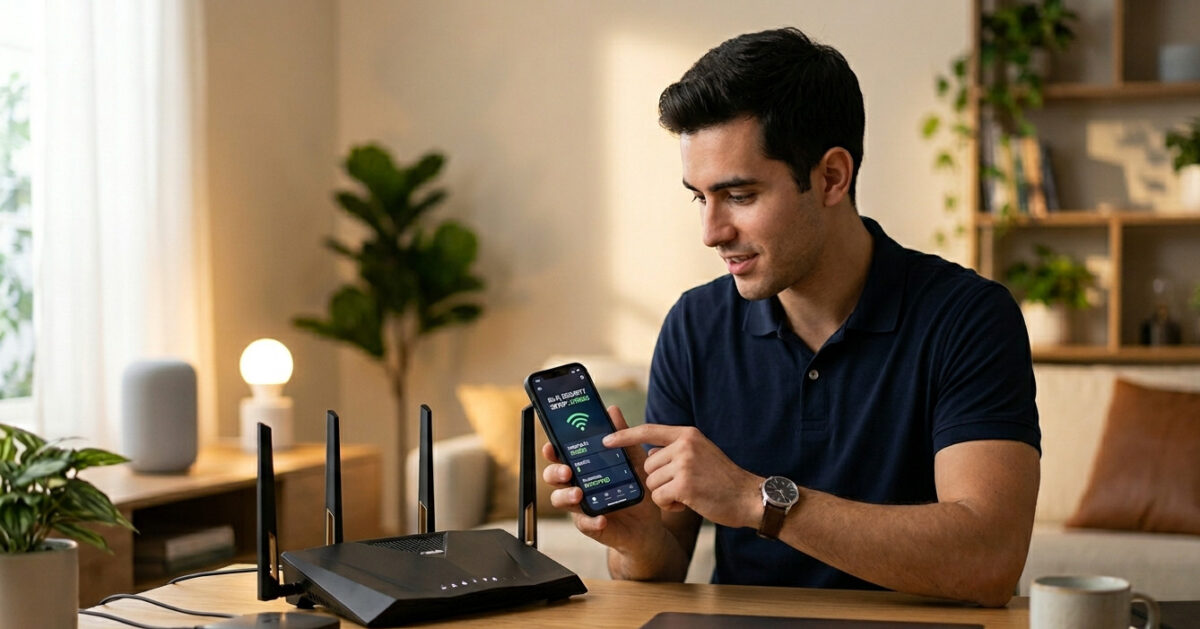

Your smart thermostat already knows your schedule. Your robot vacuum already maps your floor plan. Your doorbell camera already distinguishes between a person, a car, and a squirrel.
None of this is new. What’s new is what happens next — when these devices stop just collecting data and start genuinely thinking about it.
That’s the leap from IoT to AIoT. And it’s already happening, quietly, in millions of American homes.
What Is AIoT? – AI and IoT
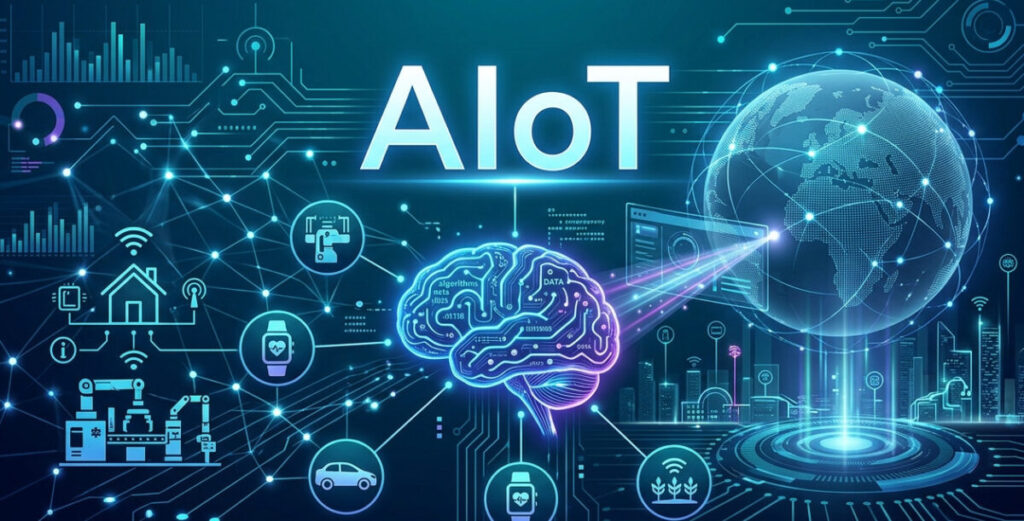
AIoT — the Artificial Intelligence of Things — is the combination of IoT infrastructure and AI technology, harnessing AI algorithms and models alongside the extensive network of interconnected physical devices, sensors, and systems that make up the IoT.
In plain English: IoT gives devices the ability to connect and share data. AI gives them the ability to understand that data and make intelligent decisions based on it. Put them together and you get devices that don’t just respond to commands — they anticipate needs, learn from behaviour, and act on their own judgment.
While IoT devices just gather information — like a modern car’s tyre pressure detector that displays pressure on the dashboard — AIoT devices add a layer of intelligence on top of this data. The difference isn’t just technical. It changes what these devices can actually do for you.
A basic smart oven can be controlled from your phone. An AIoT oven monitors the internal temperature of what you’re cooking in real time, compares it against a database of recipes, and sends you a notification the moment your chicken reaches a safe internal temperature — then turns itself off automatically. You didn’t programme it to do that. It figured it out.
IoT vs AIoT: What’s Actually Different?
The distinction is worth understanding clearly, because it changes what you should expect from smart home technology going forward.
| IoT | AIoT | |
|---|---|---|
| What it does | Connects and collects data | Connects, collects, and understands data |
| Decision making | Follows rules you set | Learns and adapts on its own |
| Typical response | “Turn on when I tap the app” | “Turn on because I’ve learned you usually want this now” |
| Example | Smart plug on a schedule | Smart thermostat that adjusts before you ask |
| Improves over time? | No | Yes |
| Requires your input? | Usually | Decreasing over time |
The practical difference in daily life is significant. IoT automates tasks you’ve manually programmed. AIoT anticipates tasks you haven’t thought to programme yet.
How AIoT Actually Works
AIoT enables devices to learn from data, adapt to dynamic environments, and autonomously perform tasks. AI is fixed into the device infrastructure — chipsets, programs, and edge computing elements — connected by IoT networks.
There are three key technologies working together under the hood:
Machine Learning: The AI component that allows devices to recognise patterns in data and improve their behaviour over time without being explicitly reprogrammed. Your Nest thermostat uses machine learning to learn your schedule. Your Spotify smart speaker uses it to understand your taste in music. The more you use these devices, the better they get.
Edge Computing: Machine learning capabilities are moving closer to the data source — known as Edge AI or Edge Intelligence — allowing for higher scalability, robustness, and efficiency. Edge computing reduces the latency compared to when an application runs on a centralised data centre or cloud. In practice, this means your smart doorbell camera can identify a face in real time — without sending the video to a server and waiting for a response. The processing happens on the device itself, instantly.
Natural Language Processing: The technology that lets you talk to your smart home in plain English and have it understand not just the words but the intent. “Hey Google, make it cosy in here” is understood not as a literal command but as a request to dim the lights, warm the room, and perhaps turn on some ambient music — because the system has learned what “cosy” means to you specifically.
AIoT in Your Home: What It Already Does
The gap between IoT and AIoT in consumer devices has been closing rapidly. Several devices you might already own are genuinely AIoT — not just connected, but intelligent.
Smart Thermostats
The Google Nest Thermostat and Ecobee are the most mainstream AIoT devices in American homes. They don’t just follow schedules — they learn them. AI-powered IoT devices such as smart thermostats improve convenience and energy efficiency by observing your patterns over days and weeks, understanding when rooms are occupied using occupancy sensors, checking local weather forecasts in real time, and continuously optimising for both comfort and energy cost. The result is a thermostat that makes hundreds of micro-adjustments per day that no human would think to programme — and an energy bill that reflects it.
Smart Security Cameras
Modern AI-powered cameras like the Google Nest Cam and Ring’s latest models have moved well beyond motion detection. They use on-device machine learning to distinguish between a person, a vehicle, an animal, and a leaf blowing past the lens. They recognise faces and can alert you when an unfamiliar person approaches. They detect packages being left — and removed. Smart cameras recognise shoppers’ faces and detect if they’ve scanned their items at self-checkout before leaving the store in retail settings — the same technology is finding its way into home security at the consumer level.
Voice Assistants
Alexa, Google Assistant, and Siri are the most widely used AIoT interfaces in the world. Every time you speak to them you’re interacting with natural language processing, intent recognition, and machine learning working simultaneously. But the intelligence is going deeper. Amazon’s Alexa now uses what it calls “hunches” — if it notices your hallway light was left on after you said goodnight, it’ll ask if you’d like it turned off. It inferred something you didn’t ask about. That’s genuine AI reasoning applied to IoT data.
Robot Vacuums
A modern Roomba or Roborock is a remarkable AIoT device. It builds and updates a map of your home using simultaneous localisation and mapping (SLAM) algorithms. It recognises obstacles — furniture, shoes, pet toys, charging cables — and navigates around them in real time. Higher-end models identify specific objects, avoid pet waste, and learn which areas of the floor need more attention based on traffic patterns. It makes hundreds of intelligent decisions per cleaning session without any instruction from you.
Smart Appliances
Samsung’s latest washers and dryers use AI to detect the weight and fabric type of a load and automatically select the optimal wash cycle. Their refrigerators monitor your food inventory, track expiry dates using internal cameras, and suggest recipes based on what’s about to go off. LG’s ThinQ appliances run AI diagnostics and can detect problems before they become breakdowns, notifying you or even contacting a service centre automatically.
AIoT Beyond Your Home: The Bigger Picture
While the consumer applications are impressive, the scale of AIoT in the wider world gives a sense of where home technology is heading.
Healthcare
Wearable devices like the Apple Watch Series 10 and Fitbit already use on-device AI to detect irregular heart rhythms, monitor blood oxygen, and identify signs of sleep apnea. Continuous glucose monitors used by millions of Americans with diabetes use AI to predict blood sugar trends before they become dangerous — not just reporting current levels but forecasting where they’ll be in 30 minutes. Wearable devices and IoT-enabled healthcare platforms collect patient data in real time, with AI algorithms analysing data to provide personalised healthcare recommendations.
Transportation
Every Tesla, and a growing number of vehicles from Ford, GM, and others, is an AIoT platform on wheels. They collect data from dozens of sensors simultaneously — cameras, radar, ultrasonic sensors, GPS — and process it in real time to assist with driving, parking, lane keeping, and collision avoidance. Over-the-air software updates improve these systems continuously. Your car gets smarter while it sits in your driveway overnight.
Smart Cities
Smart traffic management systems analyse real-time data from sensors, cameras, and connected vehicles to optimise traffic flow and reduce congestion, supporting intelligent parking solutions and public transportation management. Several US cities are piloting AI-driven systems that adjust traffic light timing dynamically based on real traffic conditions — reducing commute times and emissions simultaneously.
Energy
Smart grids use AIoT to balance electricity supply and demand in real time, routing power efficiently, detecting faults before they become outages, and integrating renewable energy sources whose output varies with weather conditions. At the home level, devices like the Tesla Powerwall and smart energy monitors use AI to optimise when to draw from the grid, when to charge storage batteries, and when to sell energy back — automatically, based on real-time pricing.
The Numbers Behind AIoT in 2026
The scale of investment reflects how seriously the technology industry takes this convergence:
- The global AI in IoT market was valued at $9.25 billion in 2024 and is expected to reach $47.78 billion by 2033, growing at 19.8% annually.
- North America accounts for 41.6% of the total AIoT market share, reflecting mature enterprise deployments and strong AI research ecosystems.
- The global AI in IoT market is expected to reach $63.64 billion by 2030.
- Every major technology company — Google, Amazon, Apple, Microsoft, Samsung — has AIoT at the centre of their hardware strategy for the next decade.
This isn’t speculative. The infrastructure is being built now, the standards are being set now, and the consumer devices are already in millions of homes.
What AIoT Means for Your Privacy
More intelligence requires more data. And more data raises legitimate questions about privacy.
AIoT devices are, by definition, collecting more information about you than basic connected devices. Your smart thermostat knows when you’re home. Your camera knows who visits. Your voice assistant hears your conversations. Your wearable monitors your heartbeat around the clock.
The key questions to ask about any AIoT device:
Where is the AI processing happening? On-device AI (edge processing) is generally more private — your data is processed locally and doesn’t leave the device. Cloud-based AI sends your data to company servers for processing. Most consumer devices use a mix of both.
What data is retained? Some devices store audio clips, video footage, or usage patterns indefinitely. Check the privacy settings and data retention policies of each device — most allow you to limit or delete stored data.
Can you opt out of personalisation? AI personalisation requires data collection. Most platforms let you disable the learning features if you prefer consistent behaviour over adaptive intelligence — at the cost of the personalisation benefits.
Is the manufacturer transparent? Companies like Apple have made on-device AI processing a selling point specifically because of privacy advantages. Others are less transparent. Research before you buy.
The privacy trade-off is real but manageable. The same awareness you’d bring to any connected device applies here — multiplied by the fact that AIoT devices collect more, and understand more, than their non-AI predecessors.
What’s Coming Next: The Near Future of AIoT at Home
The trajectory of AIoT development points toward several capabilities that are either already emerging or will reach consumer homes within the next two to three years:
Predictive rather than reactive homes. Rather than responding to your commands, your home will anticipate your needs. The lights will adjust before you notice they’re too bright. The coffee maker will start before you reach the kitchen. The heating will warm the bedroom before your alarm goes off. Not because you programmed these things, but because the system learned them.
Ambient intelligence. AI will move from specific devices to the home environment itself. Rather than talking to a smart speaker, you’ll be able to speak naturally anywhere in your home and be understood. Sensors embedded in walls, floors, and furniture will monitor activity, health indicators, and preferences without any visible hardware.
Autonomous maintenance. AIoT systems will monitor their own health and the health of your home — detecting appliance failures before they happen, identifying plumbing issues from pressure sensor data, flagging unusual energy consumption that suggests a problem. Your home will tell you it needs attention before you notice anything wrong.
Deeply personalised environments. As AI systems accumulate more data about preferences, habits, and biometrics, the home environment will adapt in real time to the specific person in the room — adjusting lighting temperature for your eyes, not your partner’s; playing music at your preferred volume; setting the shower temperature before you step in.
Is AIoT Worth Caring About Right Now?
If you already own a smart thermostat, a voice assistant, a robot vacuum, or a smart security camera — you’re already living in an AIoT home. The question isn’t whether to adopt it; it’s whether to be intentional about it.
The practical advice is simple: when buying new smart home devices in 2026, favour products from manufacturers who are actively investing in AI features — not as a buzzword, but as genuine capability. Look for on-device processing, learning features, and a track record of software updates that improve the product over time.
The difference between a connected home and an intelligent home is becoming measurable in daily convenience, energy savings, and safety. AIoT is what turns “smart” from a marketing adjective into something that actually earns the word.
Related reading: IoT in Everyday Life: What It Is and How It Works | How to Secure Smart Home Devices | Voice Assistant vs Smart Home Hub: Which Do You Need?
Published on KontraNet IoT Hub — Your beginner-friendly guide to smart living and connected tech.
- AI Home Companion Robots Are Here: What CES 2026 Revealed About Your Future Living Room
 AI home companion robots stopped being a sci-fi punchline this year. At CES 2026 in Las Vegas, LG showed off a robot with two arms and five-fingered hands folding laundry on stage. Samsung unveiled a full ecosystem of appliances it’s now calling “home companions” instead of appliances. And a startup founded by the co-creator of…
 - On-Device AI in Smart Homes: Why 2026 Is the Year of Local Intelligenceon-device AI – Smart homes are changing fast, and one of the biggest shifts in 2026 is happening inside the devices themselves. Instead of sending every command and camera clip to the cloud, more smart home products are now processing data locally for faster response, better privacy, and more reliable automation. For homeowners, this is…
- Home Assistant for Beginners: Your First Step Away from Big Tech’s Smart HomeHome Assistant for beginners usually starts the same way: frustration. Maybe Google Home dropped a device for no reason. Maybe Alexa started asking for a subscription to use a feature that was free last year. Maybe a smart home brand you trusted announced it was shutting down its cloud servers, turning thousands of dollars of…
- What Data Do Smart Home Devices Collect? (And What Happens to It)What data do smart home devices collect? The honest answer is: far more than most people realise, far more than is necessary for the devices to do their jobs, and in many cases, far more than the average person would be comfortable with if they read the privacy policy in full. 82% of smart home…
- Digital Twins Explained: The Technology That Creates a Living Copy of EverythingDigital twins explained in one sentence: a digital twin is a living, continuously updated virtual replica of a real physical object, system, or process — connected to its real-world counterpart through sensors and data, updating in real time as the physical version changes. That definition is accurate, but it doesn’t quite capture why this technology…






Edge Computing: The Future of Data Processing and Connectivity

Linux and the Internet of Things: Powering the Smart Future

Turning Your Old Laptop or Computer into a Linux-Based Email Server: A Comprehensive Guide