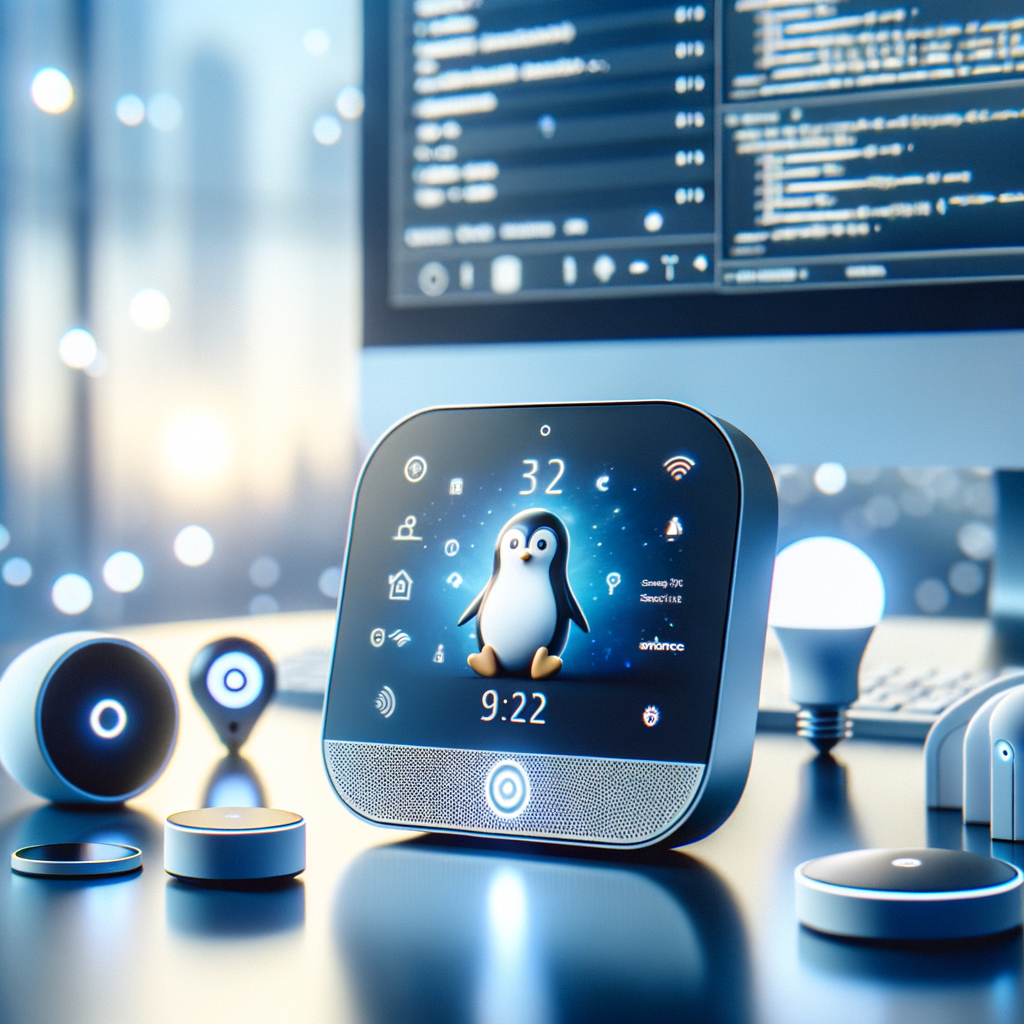

The Internet of Things (IoT) is everywhere—from smart homes and wearable devices to industrial automation and self-driving cars. Behind the scenes, one operating system plays a surprisingly dominant role: Linux. Known for its stability, flexibility, and open-source nature, Linux has become the backbone of countless IoT devices and platforms. But what makes Linux so well-suited for IoT, and where is it being used today?
Why Linux is a Natural Fit for IoT
IoT devices need lightweight, reliable, and customizable software foundations. Linux fits this role perfectly.
- Open-source flexibility: Developers can tailor Linux distributions to fit specific IoT use cases.
- Security and updates: A global community provides continuous patches and improvements.
- Low cost: No licensing fees, making it ideal for scaling IoT deployments.
- Hardware compatibility: Runs on everything from small ARM processors to high-powered industrial computers.
This combination makes Linux a strong alternative to proprietary operating systems in IoT.
Linux in Embedded Systems
Many IoT devices rely on embedded Linux for their operating system. These devices need an OS that can run on limited hardware while still providing robust features.
Popular Linux-based platforms include:
- Raspberry Pi OS – Used widely for prototyping IoT devices.
- BeagleBone Black (Debian-based) – Common in robotics and automation.
- Ubuntu Core – Lightweight and secure, designed for IoT and embedded systems.
- Yocto Project / Buildroot – Customizable Linux builds for resource-constrained devices.
These distributions allow IoT developers to optimize performance while keeping costs low.
Linux as the Gateway OS
IoT systems don’t just include sensors—they need gateways that connect devices to the cloud. Gateways often run Linux because of its networking and protocol support.
- Protocol support: MQTT, CoAP, Zigbee, and LoRaWAN all run smoothly on Linux.
- Edge computing: Local processing reduces reliance on cloud services.
- Flexibility: Linux can run Docker or Kubernetes for containerized IoT applications.
In short, Linux-powered gateways act as the “middle layer” between raw sensor data and cloud platforms.
Security and Reliability
Security is one of the biggest concerns in IoT, and Linux provides a strong foundation.
- Built-in firewalls (iptables/nftables) help protect devices.
- SELinux and AppArmor enforce strict access controls.
- Containerization (Docker, Podman) isolates applications for safer execution.
- Regular updates ensure vulnerabilities are patched quickly.
For industries like healthcare and transportation, where safety is critical, Linux’s reliability is a major advantage.
[linkpreview]https://linuxlap.com/linux-tips/selinux-security-enhanced-linux/[/linkpreview]
Real-World Applications of Linux in IoT
Linux powers IoT across multiple sectors:
- Smart Homes – Many hubs and smart appliances use lightweight Linux distributions.
- Industrial Automation – PLCs, robotics, and predictive maintenance systems run on Linux gateways.
- Automotive Industry – Projects like Automotive Grade Linux (AGL) drive infotainment and connected car platforms.
- Healthcare – Wearables and diagnostic devices rely on Linux for stability and security.
Challenges of Using Linux in IoT
Despite its strengths, Linux isn’t perfect for every IoT use case.
- Resource constraints: Tiny devices with very limited memory may require real-time operating systems (RTOS) instead of Linux.
- Maintenance complexity: Managing large fleets of Linux-based IoT devices requires robust update and monitoring systems.
- Security misconfigurations: While Linux provides strong security tools, they must be properly set up.
Still, these challenges are often outweighed by the benefits.
IoT Trends to Watch in 2025
Looking Ahead
The role of Linux in IoT is only growing stronger. With the rise of edge AI, 5G networks, and containerized applications, Linux provides the ideal environment for next-generation IoT systems. From smart cities to autonomous vehicles, Linux continues to be the silent powerhouse making the connected world possible.
Final Thought
Linux has earned its place as the backbone of IoT. Its combination of flexibility, security, and scalability makes it the go-to choice for developers, manufacturers, and enterprises alike. Whether in a smart thermostat or a factory robot, chances are that Linux is running behind the scenes, keeping the IoT world connected and reliable.
- What Data Do Smart Home Devices Collect? (And What Happens to It)
 What data do smart home devices collect? The honest answer is: far more than most people realise, far more than is necessary for the devices to do their jobs, and in many cases, far more than the average person would be comfortable with if they read the privacy policy in full. 82% of smart home…
 - Digital Twins Explained: The Technology That Creates a Living Copy of EverythingDigital twins explained in one sentence: a digital twin is a living, continuously updated virtual replica of a real physical object, system, or process — connected to its real-world counterpart through sensors and data, updating in real time as the physical version changes. That definition is accurate, but it doesn’t quite capture why this technology…
- IoT Sensors Explained: What They Are, How They Work, and Where They’re Already in Your HomeIoT sensors explained simply: every smart device you own — your thermostat, your fitness tracker, your doorbell camera, your robot vacuum — relies on at least one sensor to do its job. Sensors are the reason smart devices are smart. Without them, a connected device is just a device. Yet most explanations of IoT sensors…
- Matter 1.4 vs Zigbee vs Z-Wave: Best Smart Home Protocol for US Homes in 2026By KontraNet IoT Hub | Last Updated: June 3, 2026 | Reading time: 11 min Quick Pick for US Homeowners in 2026 Use this table if you just need the answer fast: Your Situation Best Protocol in 2026 Why It Wins for US Homes Apple + Google + Alexa household Matter 1.4 over Thread All 3 ecosystems control the…
- Best Cellular IoT Data Plans for US Makers in 2026: Hologram vs Twilio vs Soracom TestedBy KontraNet IoT Hub | Last Updated: June 1, 2026 | Reading time: 9 min Quick Pick for US Makers in 2026 Use this table if you just need the answer fast: Your Project Type Best IoT SIM in 2026 Why It Wins for US Makers 1-10 devices, prototyping Hologram IoT SIM Free 1MB/month per device forever. Pay-as-you-go after.…