
Why Go Open-Source with Your Smart Home?
The appeal of open-source smart home systems is growing rapidly—and for good reason. Unlike proprietary systems locked behind paywalls or brand-specific ecosystems, open-source platforms give you freedom, flexibility, and full control over your smart devices.
Whether you’re a privacy-conscious homeowner or a DIY enthusiast, building an open-source smart home gives you the power to shape your environment exactly the way you want it.
Key Benefits of an Open-Source Smart Home
- Privacy and Security: Keep your data local, not on the cloud.
- Customization: Automate anything with full control over the logic.
- Interoperability: Mix and match hardware from different brands.
- Cost-Effective: Use affordable components without licensing fees.
- Community Support: Large developer communities behind many platforms.
Essential Hardware You’ll Need
[linkpreview]https://kontranet.com/diy-iot-projects/smart-home-network/[/linkpreview]
To build a functional smart home, start with the basics:
🧠 1. Smart Home Hub
The brain of your system. Common options include:
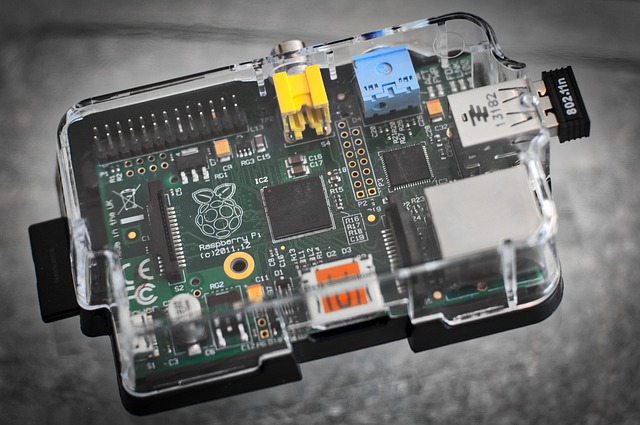
- Raspberry Pi – Affordable, flexible, and ideal for running platforms like Home Assistant.
- Old PC or Laptop – Repurpose it as a powerful always-on hub.
- Mini PCs (e.g., Intel NUC) – Compact yet powerful enough for demanding setups.
📡 2. Sensors and Actuators
These detect and control the environment:
- Temperature & Humidity Sensors – Like DHT22 or Aqara.
- Motion Sensors – For lights, alarms, and presence automation.
- Smart Plugs and Relays – Control appliances remotely.
- Smart Bulbs – RGB or tunable white for mood lighting.
📶 3. Connectivity Modules
Make sure your devices can communicate:
- Zigbee Dongle (e.g., Sonoff Zigbee 3.0)
- Z-Wave Stick (e.g., Aeotec Z-Stick Gen5)
- Wi-Fi & Bluetooth Modules – Already in most routers or Raspberry Pis.
Top Open-Source Platforms to Power Your Smart Home
1. Home Assistant
Arguably the most popular platform today. Offers a beautiful UI, YAML-based automation, and wide integration support.
- Pros: Local control, great community, frequent updates.
- Cons: Learning curve with YAML configuration.
2. OpenHAB
A strong competitor to Home Assistant with enterprise-grade flexibility and Java-based architecture.
- Pros: Rule engine, modular architecture.
- Cons: Slightly outdated UI compared to others.
3. Domoticz
Lightweight and great for smaller systems or limited hardware.
- Pros: Fast performance, low resource use.
- Cons: Limited integrations compared to HA or OpenHAB.
4. Node-RED
Visual programming tool that can run alongside your main hub. Ideal for building custom automation flows.
- Pros: Drag-and-drop simplicity.
- Cons: Not a full home automation platform on its own.
Suggested Device Brands That Work Well with Open-Source
- Sonoff (Tasmota firmware compatible)
- Shelly (Native REST & MQTT support)
- Tuya (After flashing or local API)
- Aqara & Xiaomi (Great Zigbee support)
Must-Have Software Tools
- MQTT Broker – For device messaging (e.g., Mosquitto)
- ESPHome – To program ESP8266/ESP32 devices
- Tasmota – Lightweight firmware for Wi-Fi devices
- Grafana + InfluxDB – For real-time sensor dashboards
Tips for a Successful Open-Source Smart Home
- Start small – Try automating lights or a thermostat.
- Document everything – Names, IP addresses, login details.
- Backup frequently – Especially when testing new configurations.
- Join communities – Reddit, GitHub, and Discord are goldmines for help.
Real-World Use Case
Imagine walking into your home. Your presence is detected by a motion sensor; the lights turn on with a soft glow based on ambient brightness. The temperature adjusts automatically, and your favorite playlist starts—all without touching your phone.
Now imagine all this built on your terms, with zero cloud reliance. That’s the power of an open-source smart home.
Final Word
Building an open-source smart home is more than a DIY project—it’s a journey toward complete digital sovereignty. With the right tools and platforms, you’ll create a system that works exactly the way you want, without vendor lock-ins or cloud dependencies.
As the open-source ecosystem continues to grow, the possibilities for smarter, more personal, and secure living are truly endless.
FAQ: Open-Source Smart Homes
Q: Is building an open-source smart home difficult?
A: Not necessarily. With user-friendly platforms like Home Assistant and Raspberry Pi tutorials, even beginners can start small and scale gradually.
Q: Can I use Alexa or Google Assistant with open-source platforms?
A: Yes. Most platforms like Home Assistant offer integrations for voice assistants with some setup required.
Q: Will it work offline?
A: Absolutely. One of the main benefits is local control, which means your smart home continues to function even without internet.
Q: Is it safe?
A: When set up properly, an open-source smart home can be more secure than many cloud-based alternatives. Just keep your software updated and use strong passwords.
Q: What happens if I break something?
A: Most open-source platforms support backup and restore functions. You can usually revert to a previous stable configuration.
- IoT Sensors Explained: What They Are, How They Work, and Where They’re Already in Your Home
 IoT sensors explained simply: every smart device you own — your thermostat, your fitness tracker, your doorbell camera, your robot vacuum — relies on at least one sensor to do its job. Sensors are the reason smart devices are smart. Without them, a connected device is just a device. Yet most explanations of IoT sensors…
 - Matter 1.4 vs Zigbee vs Z-Wave: Best Smart Home Protocol for US Homes in 2026By KontraNet IoT Hub | Last Updated: June 3, 2026 | Reading time: 11 min Quick Pick for US Homeowners in 2026 Use this table if you just need the answer fast: Your Situation Best Protocol in 2026 Why It Wins for US Homes Apple + Google + Alexa household Matter 1.4 over Thread All 3 ecosystems control the…
- Best Cellular IoT Data Plans for US Makers in 2026: Hologram vs Twilio vs Soracom TestedBy KontraNet IoT Hub | Last Updated: June 1, 2026 | Reading time: 9 min Quick Pick for US Makers in 2026 Use this table if you just need the answer fast: Your Project Type Best IoT SIM in 2026 Why It Wins for US Makers 1-10 devices, prototyping Hologram IoT SIM Free 1MB/month per device forever. Pay-as-you-go after.…
- Smart Home Energy Saving: How to Cut Your Electricity Bill in 2026Smart home energy saving is one of the most effective ways to cut your electricity costs in 2026 — and the results are measurable. The average American household spends between $1,500 and $2,000 on electricity every year. Most of that money goes to heating, cooling, and appliances running longer than they need to — and…
- Smart Locks & Keyless Entry: The Complete Beginner’s Guide for 2026Keys are one of those things we’ve lived with for so long that we forget how inconvenient they actually are. You lose them. You forget them. You make copies for the plumber and never get them back. You lie awake wondering if you actually locked the front door when you left for vacation. Smart locks…
- Best Smart Home Gadgets Under $50 in 2026: 10 Picks That Are Actually Worth ItSmart home technology has a reputation for being expensive. And sure, a fully automated house with motorised blinds, a video doorbell on every door, and a $300 thermostat isn’t cheap. But getting started? That doesn’t have to cost more than a couple of takeout dinners. In 2026, the best smart home gadgets under $50 are…