
Pet owners know the importance of feeding their furry companions on time, but busy schedules, travel, or unexpected delays can make it challenging. This is where IoT pet feeders come in—a modern, smart solution that ensures your pets are fed properly, even when you’re not home. These automated feeders offer remote control, scheduling, and even real-time monitoring, making pet care more convenient than ever.
But how exactly do IoT pet feeders work? What are their benefits and drawbacks? And which models should you consider? Let’s dive into everything you need to know about smart pet feeders.
How Does an IoT Pet Feeder Work?
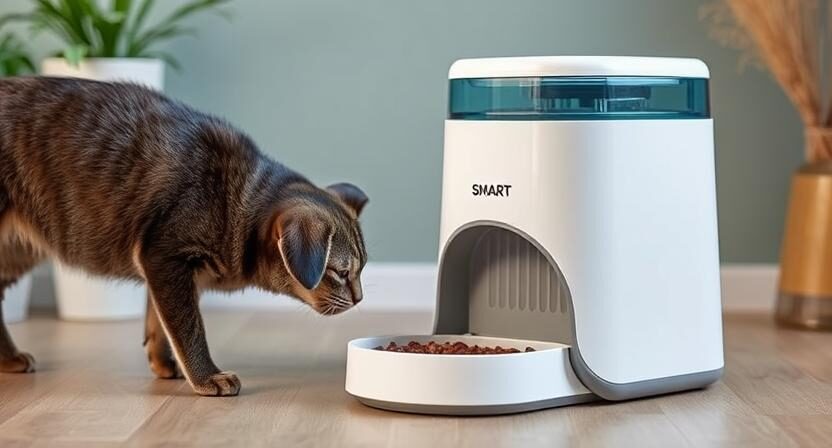
An IoT (Internet of Things) pet feeder is an automatic food dispenser that connects to the internet, allowing pet owners to control feeding times and portion sizes through a smartphone app. These devices typically work as follows:
- Smartphone App Control – Most feeders come with an app that lets you schedule meals, adjust portion sizes, and even trigger an instant feeding remotely.
- Wi-Fi or Bluetooth Connectivity – The feeder connects to your home’s Wi-Fi network, enabling remote access and control from anywhere. Some models also support Bluetooth for local control.
- Built-in Sensors – Many feeders have sensors to detect remaining food levels and prevent overfeeding. Some advanced models even have cameras for live video monitoring.
- Voice Commands & AI Integration – Some feeders are compatible with Amazon Alexa, Google Assistant, or Siri, allowing voice control for feeding. AI-driven models can also adjust feeding based on your pet’s eating habits.
- Battery Backup – To ensure your pet is never left hungry, most IoT pet feeders include a battery backup in case of power outages.
These feeders are particularly useful for dogs and cats, but some models are designed for small animals like rabbits or birds.
How to Use an IoT Pet Feeder
Setting up an IoT pet feeder is relatively simple, typically involving the following steps:
- Unbox and Assemble – Most feeders come pre-assembled, but you may need to attach a food container or lid.
- Download the App – Install the feeder’s companion app on your smartphone (available on iOS and Android).
- Connect to Wi-Fi – Follow the setup instructions to connect the feeder to your home Wi-Fi network.
- Configure Feeding Schedule – Set meal times, portion sizes, and any special instructions for your pet’s diet.
- Test the Feeder – Run a test feeding to ensure it dispenses the correct portion.
- Monitor and Adjust – Use the app to monitor feeding patterns and adjust settings as needed.
Some feeders also include smart notifications, alerting you when food is running low or if your pet hasn’t eaten.
Pros of Using an IoT Pet Feeder
✅ Convenience
- Automates feeding, ensuring pets eat on time.
- Ideal for pet owners with busy schedules or frequent travel.
✅ Portion Control
- Helps prevent overfeeding or underfeeding, especially for pets on a strict diet.
- Some models allow you to customize portion sizes based on your pet’s needs.
✅ Remote Monitoring & Control
- Feed your pet from anywhere using a mobile app.
- Some models have cameras to check if your pet has eaten.
✅ Works with Voice Assistants
- Hands-free operation with Alexa, Google Assistant, or Siri.
✅ Food Freshness & Storage
- Airtight containers help keep food fresh and prevent pests.
- Some feeders include cooling options for wet food.
Cons of Using an IoT Pet Feeder
❌ Internet Dependency
- If the Wi-Fi goes down, remote control features may not work.
- Some feeders offer local control as a backup.
❌ Power Failure Risks
- A power outage can stop the feeder unless it has a battery backup.
❌ Limited Interaction
- While smart feeders provide convenience, they can’t replace human interaction—pets still need companionship and engagement.
❌ Cost
- Smart pet feeders can be expensive, ranging from $50 to $300+, depending on features.
❌ Not Suitable for All Pets
- Some pets may take time to adjust to automated feeders.
- Larger dogs may need specialized feeders due to portion size limits.
Where to Get an IoT Pet Feeder
IoT pet feeders are available at major online retailers, pet stores, and specialty tech shops. Here are some of the best places to buy one:
- Amazon – Wide selection of models with customer reviews and ratings.
- Chewy – Great for pet-specific products with helpful customer service.
- Petco & PetSmart – Physical stores where you can see the feeders before purchasing.
- Best Buy & Walmart – Tech-friendly stores that often carry smart pet products.
- Manufacturer Websites – Direct purchase from brands like PetSafe, WOpet, Feeder-Robot, and SureFeed ensures warranty coverage.
Top IoT Pet Feeders to Consider
1️⃣ PetSafe Smart Feed Automatic Feeder
- Features: Wi-Fi connectivity, smartphone control, Alexa compatibility
- Pros: Reliable, good portion control, app notifications
- Cons: Pricier than basic models
2️⃣ WOpet SmartFeeder
- Features: HD camera, two-way audio, app-controlled feeding
- Pros: Lets you see and talk to your pet, customizable schedules
- Cons: Requires strong Wi-Fi for video streaming
3️⃣ Feeder-Robot by Whisker
- Features: Self-cleaning bowl, AI-based feeding, food-level monitoring
- Pros: Smartest option, great for multiple pets
- Cons: Expensive, requires subscription for premium features
4️⃣ SureFeed Microchip Pet Feeder
- Features: RFID tag recognition (feeds only assigned pet), good for multi-pet homes
- Pros: Prevents food stealing among pets, ideal for homes with different diets
- Cons: Limited to dry food, requires RFID collar
Is an IoT Pet Feeder Right for You?
If you have a busy lifestyle, travel often, or need better portion control for your pet, an IoT pet feeder is a worthwhile investment. It ensures your pet is fed on time, even when you’re not around, and provides smart features like scheduling, monitoring, and voice control.
However, it’s not a replacement for real interaction—pets still need attention, exercise, and companionship. If you decide to get a smart feeder, choose one that best fits your pet’s needs and lifestyle.
Final Thoughts
IoT pet feeders are revolutionizing pet care, offering convenience and precision that traditional feeders lack. As technology continues to evolve, we may see even smarter feeders with AI-driven meal adjustments, real-time health monitoring, and advanced security features.
For now, if you want peace of mind knowing your furry friend is well-fed—even when you’re away—a smart pet feeder is an excellent addition to your home. Just be sure to choose a reliable model, keep an eye on your pet’s eating habits, and combine it with plenty of love and attention.
Would you consider using a smart pet feeder? Let us know your thoughts! 🐾
- AI Home Companion Robots Are Here: What CES 2026 Revealed About Your Future Living Room
 AI home companion robots stopped being a sci-fi punchline this year. At CES 2026 in Las Vegas, LG showed off a robot with two arms and five-fingered hands folding laundry on stage. Samsung unveiled a full ecosystem of appliances it’s now calling “home companions” instead of appliances. And a startup founded by the co-creator of…
 - On-Device AI in Smart Homes: Why 2026 Is the Year of Local Intelligenceon-device AI – Smart homes are changing fast, and one of the biggest shifts in 2026 is happening inside the devices themselves. Instead of sending every command and camera clip to the cloud, more smart home products are now processing data locally for faster response, better privacy, and more reliable automation. For homeowners, this is…
- Home Assistant for Beginners: Your First Step Away from Big Tech’s Smart HomeHome Assistant for beginners usually starts the same way: frustration. Maybe Google Home dropped a device for no reason. Maybe Alexa started asking for a subscription to use a feature that was free last year. Maybe a smart home brand you trusted announced it was shutting down its cloud servers, turning thousands of dollars of…
- What Data Do Smart Home Devices Collect? (And What Happens to It)What data do smart home devices collect? The honest answer is: far more than most people realise, far more than is necessary for the devices to do their jobs, and in many cases, far more than the average person would be comfortable with if they read the privacy policy in full. 82% of smart home…
- Digital Twins Explained: The Technology That Creates a Living Copy of EverythingDigital twins explained in one sentence: a digital twin is a living, continuously updated virtual replica of a real physical object, system, or process — connected to its real-world counterpart through sensors and data, updating in real time as the physical version changes. That definition is accurate, but it doesn’t quite capture why this technology…