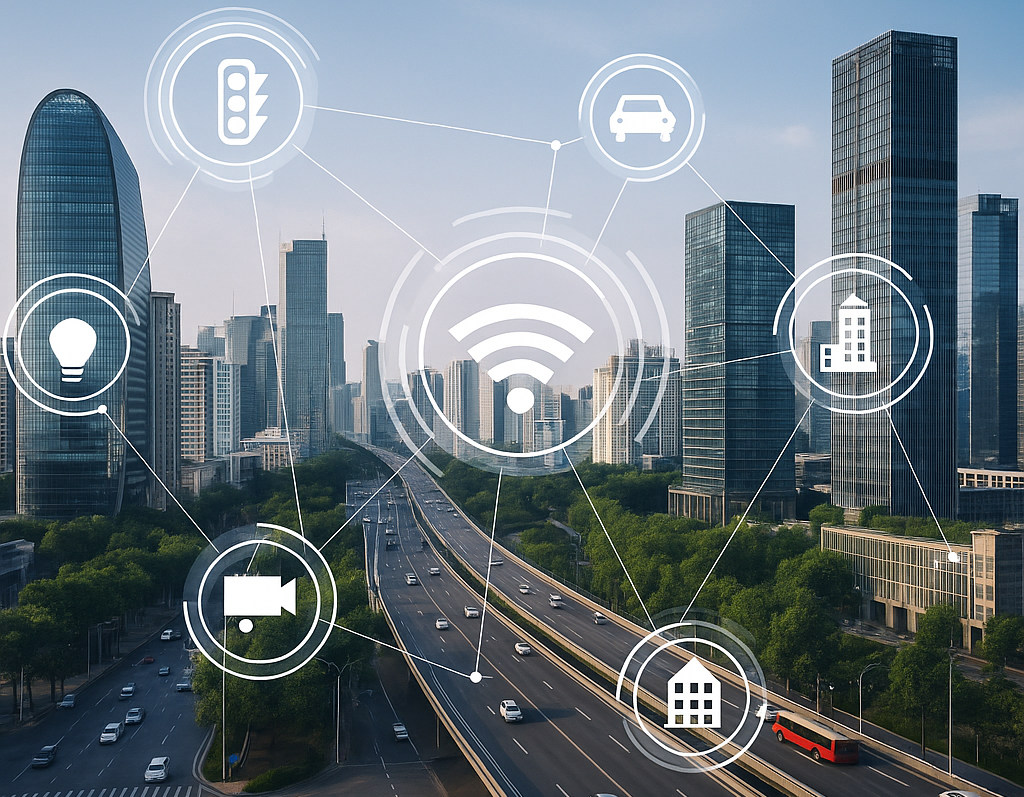

As cities worldwide face growing populations, environmental challenges, and infrastructure demands, technology offers a path forward. At the heart of this transformation lies the Internet of Things (IoT). Through connected devices, sensors, and intelligent systems, cities are becoming “smart” — improving services, reducing waste, and enhancing citizens’ quality of life. In this article, we’ll explore how IoT is revolutionizing urban living, the challenges cities face, and what the future of smart cities may look like.
What Are Smart Cities?
Smart cities use digital technology and data-driven solutions to improve urban operations and services. This includes everything from traffic management to waste collection, energy efficiency, public safety, and citizen engagement. A smart city isn’t defined by the presence of tech alone — it’s defined by how that tech improves everyday life.
IoT is a key enabler. With embedded sensors, real-time data, and machine-to-machine communication, urban systems become adaptive, responsive, and far more efficient.
Core Applications of IoT in Smart Cities
1. Traffic and Transportation
IoT helps cities monitor traffic flow, reduce congestion, and optimize public transport routes. Smart traffic signals can adjust timings based on real-time conditions. GPS-enabled buses and trains share live updates with commuters. Parking sensors guide drivers to available spots, reducing idle time and emissions.
2. Smart Lighting and Energy Efficiency
Streetlights fitted with IoT sensors can dim or brighten based on pedestrian activity, saving energy. IoT also powers smart grids that balance supply and demand, integrate renewable energy, and detect outages instantly.
3. Waste Management
IoT-enabled bins alert sanitation services when they’re full, optimizing collection routes and reducing unnecessary trips. This minimizes fuel use and cuts costs.
4. Public Safety and Surveillance
CCTV systems with AI and IoT can detect suspicious behavior, traffic accidents, or unauthorized access to restricted areas. Gunshot detection sensors and emergency response systems improve urban safety.
5. Water and Air Quality Monitoring
Environmental sensors track air pollution, water levels, or leaks in real-time. Alerts can prevent flooding or address contamination quickly. Cities like Singapore use such data to enforce sustainability goals and protect public health.
6. Smart Buildings and Infrastructure
IoT-based systems control lighting, heating, and access in buildings to improve energy use and security. Structural sensors can detect stress or damage in bridges and roads before failure occurs.
[linkpreview]https://kontranet.com/iot-security/smart-home-security/[/linkpreview]
Challenges Facing Smart Cities
Despite the promise, implementing IoT at a city-wide scale comes with hurdles:
- Privacy concerns: Data collection must be transparent, and citizens must retain control over personal information.
- Cybersecurity threats: A connected city is a potential target for cyberattacks. Robust protection is essential.
- Cost and scalability: Upfront investment in infrastructure, sensors, and data systems is high, and long-term maintenance must be considered.
- Interoperability: Devices from different vendors must communicate seamlessly, which isn’t always guaranteed.
Success Stories: Cities Leading the Way
- Barcelona: A pioneer in smart city solutions, Barcelona uses IoT for parking, waste, water, and smart lighting — saving millions annually.
- Amsterdam: Implements IoT in mobility, sustainability, and digital infrastructure with open data policies and citizen participation.
- Singapore: Has developed a comprehensive smart nation strategy, integrating IoT into governance, transport, and environment.
The Future of Smart Cities

Looking ahead, smart cities will become even more immersive and citizen-centric. We’ll see integration with AI for predictive management, 5G for faster connectivity, and digital twins — virtual models of the city — used for planning and simulation.
In time, smart cities will not only react to problems but prevent them. From disaster response to energy optimization, intelligent urban systems will lead the way toward sustainable, livable futures.
FAQs About Smart Cities and IoT
What’s the difference between a smart city and a regular city?
A smart city uses IoT and data to optimize infrastructure and services, whereas a regular city may rely on traditional systems and reactive approaches.
Is 5G important for smart cities?
Yes. 5G provides the high-speed, low-latency connectivity needed for real-time IoT applications, from autonomous vehicles to sensor networks.
Do smart cities compromise privacy?
They can, which is why ethical design, transparent data policies, and citizen oversight are essential to protect privacy.
Are smart cities only for big urban areas?
Not at all. Smaller towns can implement scalable IoT solutions for traffic, waste, or utilities and benefit from efficiency gains.
- IoT Sensors Explained: What They Are, How They Work, and Where They’re Already in Your Home
 IoT sensors explained simply: every smart device you own — your thermostat, your fitness tracker, your doorbell camera, your robot vacuum — relies on at least one sensor to do its job. Sensors are the reason smart devices are smart. Without them, a connected device is just a device. Yet most explanations of IoT sensors…
 - Best Cellular IoT Data Plans for US Makers in 2026: Hologram vs Twilio vs Soracom TestedBy KontraNet IoT Hub | Last Updated: June 1, 2026 | Reading time: 9 min Quick Pick for US Makers in 2026 Use this table if you just need the answer fast: Your Project Type Best IoT SIM in 2026 Why It Wins for US Makers 1-10 devices, prototyping Hologram IoT SIM Free 1MB/month per device forever. Pay-as-you-go after.…
- Best Linux Distros for IoT in 2026: Pi 5, RISC-V, and Edge AI TestedLinux powers 80% of Internet of Things devices shipped in the US, from your Home Assistant hub to industrial sensors at Ford plants. With Raspberry Pi 5, cheap RISC-V boards, and Matter 1.4 changing the game in 2026, picking the right distro matters more than ever. We tested five of the best Linux distros for…
- IoT in Everyday Life: What It Is, How It Works, and Why It Already Affects YouIoT in Everyday Life – You woke up this morning and IoT was already working. Maybe your thermostat had already warmed the house before your alarm went off — because it learned your schedule weeks ago. Maybe your fitness tracker quietly recorded your sleep quality and synced the data to your phone before you even…
- Smart Plug Not Connecting? 10 Easy Fixes That Work (2026 Guide)If Smart Plug Not Connecting – Quick overview Few things are more frustrating than setting up a smart home device — only to see it fail at the last step. If your smart plug is not connecting, you’re not alone. This is one of the most common issues beginners face when starting with smart home…




IoT Trends to Watch in 2025
The Internet of Things (IoT) continues to reshape industries, revolutionize homes, and enhance daily lives. As we move further into 2025, new trends are emerging that promise to accelerate IoT adoption and expand its potential. From advanced connectivity to innovative applications in various sectors, here are the top IoT trends to watch this year. 1.… Read More »