
Quick Summary
- Not all smart devices save money — some actually increase costs
- The right devices can reduce energy bills and prevent waste
- Focus on automation + energy monitoring for real savings
- Most users see savings within 2–6 months
Smart homes are often marketed as futuristic and convenient — but one of the biggest real-world benefits is often overlooked: saving money.
The problem is, not every smart device is worth it. Some look impressive but add very little value, while others can quietly cut your energy bills and reduce unnecessary usage every single day.
In this guide, we’ll focus only on smart home devices that actually make a financial difference. No hype, no unnecessary gadgets — just practical tools that pay for themselves over time.
What Makes a Smart Device “Money-Saving”?
Before jumping into the list, it’s important to understand what separates useful devices from gimmicks.
A device saves money if it:
- Reduces energy consumption
- Prevents waste or damage
- Automates something you would otherwise forget
- Provides insights that change your behavior
For example:
A smart light alone doesn’t save much.
But a smart lighting system that turns off automatically? That’s where savings begin.
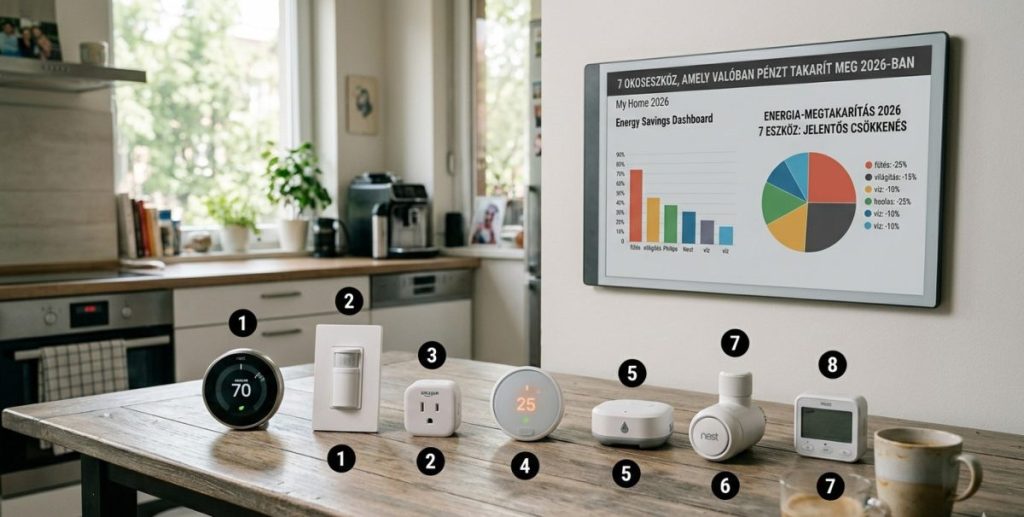
1. Smart Thermostats
Why they save money
Heating and cooling are usually the biggest energy expenses in a home.
Smart thermostats optimize this by:
- Learning your schedule
- Adjusting temperature automatically
- Reducing heating when you’re not home
Real impact
Many users see:
- 10–20% reduction in heating costs
- noticeable savings within the first few months
Example use case
Instead of heating your home all day, the system:
- lowers temperature while you’re away
- warms it up just before you return
👉 No wasted energy, no manual adjustment.
2. Smart Plugs with Energy Monitoring
Why they save money
Most people don’t realize how much energy devices consume while idle.
- track energy usage
- allow remote shutdown
- automate schedules
Real impact
You can:
- identify energy-hungry devices
- cut standby power usage
- prevent devices running unnecessarily
Example
Turning off:
- TVs
- gaming consoles
- chargers
when not in use can make a measurable difference over time.
3. Smart Lighting Systems
Why they save money
Lights left on unnecessarily are one of the most common energy wastes.
- turns off automatically
- adjusts brightness
- uses energy-efficient LEDs
Real impact
Savings come from:
- automation (no forgotten lights)
- reduced usage duration
Example
Lights that:
- turn off when you leave a room
- dim at night
👉 Small savings individually, but consistent over time.
4. Smart Water Leak Sensors
Why they save money
This is not about energy — it’s about preventing expensive damage.
Leak sensors:
- detect water leaks early
- send instant alerts
Real impact
They can prevent:
- major repair costs
- water damage
- mold issues
Example
A small pipe leak detected early can save hundreds (or thousands) in repairs.
5. Smart Power Strips
Why they save money
Unlike basic plugs, these:
- manage multiple devices
- cut power to unused electronics
Real impact
They reduce:
- “phantom power” consumption
- unnecessary energy drain
Example
Automatically turning off:
- TV setups
- office equipment
when not in use
6. Smart Blinds or Curtains
Why they save money
Heating and cooling efficiency isn’t just about HVAC systems.
Smart blinds:
- block heat during summer
- retain warmth during winter
Real impact
They reduce:
- cooling costs
- heating loss
Example
Closing blinds during peak sunlight hours keeps rooms cooler without extra air conditioning.
7. Energy Monitoring Systems (Whole-Home)
Why they save money
This is where things become powerful.
These systems:
- track total energy usage
- identify inefficiencies
- provide real-time insights
Real impact
You can:
- see exactly where money is being spent
- adjust behavior accordingly
Example
Many users discover:
- old appliances using excessive energy
- unnecessary usage patterns
Comparison Table
| Device Type | Initial Cost | Savings Potential | Payback Time |
|---|---|---|---|
| Smart Thermostat | Medium | High | 3–6 months |
| Smart Plug | Low | Medium | 2–4 months |
| Smart Lighting | Low | Low–Medium | 4–8 months |
| Leak Sensor | Low | Very High (risk prevention) | Instant (if used) |
| Smart Power Strip | Low | Medium | 2–5 months |
| Smart Blinds | Medium | Medium | 6–12 months |
| Energy Monitor | Medium | High | 3–6 months |
Common Mistakes That Cancel Out Savings
Even with the right devices, people often lose the benefits.
1. No automation setup
Buying smart devices without using automation defeats the purpose.
2. Overcomplicating the system
Too many devices can lead to inefficiency and confusion.
3. Ignoring data insights
Energy monitoring is useless if you don’t act on the information.
How to Get Started (Simple Plan)
You don’t need to buy everything at once.
Step 1: Start with a smart plug
Low cost, immediate insights.
Step 2: Add a thermostat or lighting
Begin automation.
Step 3: Expand based on real needs
Focus on where you waste the most.
FAQ
Do smart home devices really save money?
Yes — but only if they reduce energy use or prevent waste. Not all devices provide financial benefits.
How long does it take to see savings?
Most users notice savings within 2–6 months, depending on usage and device type.
Are smart devices expensive to maintain?
Generally no. Most have low ongoing costs, especially compared to the savings they provide.
What is the best first smart home device to buy?
A smart plug is the easiest and most affordable starting point.
Can smart homes reduce electricity bills significantly?
Yes, especially when using thermostats, automation, and energy monitoring systems.
Smarter Living, Lower Costs
Smart homes aren’t just about convenience — they’re about control. When used correctly, the right devices can quietly reduce your expenses while making your home more efficient and responsive.
The key is to focus on practical value, not just features. Start small, automate intelligently, and let data guide your decisions.
Over time, those small optimizations add up — and that’s where smart homes truly prove their worth.
- Matter 1.4 vs Zigbee vs Z-Wave: Best Smart Home Protocol for US Homes in 2026
 By KontraNet IoT Hub | Last Updated: June 3, 2026 | Reading time: 11 min Quick Pick for US Homeowners in 2026 Use this table if you just need the answer fast: Your Situation Best Protocol in 2026 Why It Wins for US Homes Apple + Google + Alexa household Matter 1.4 over Thread All 3 ecosystems control the…
 - Best Cellular IoT Data Plans for US Makers in 2026: Hologram vs Twilio vs Soracom TestedBy KontraNet IoT Hub | Last Updated: June 1, 2026 | Reading time: 9 min Quick Pick for US Makers in 2026 Use this table if you just need the answer fast: Your Project Type Best IoT SIM in 2026 Why It Wins for US Makers 1-10 devices, prototyping Hologram IoT SIM Free 1MB/month per device forever. Pay-as-you-go after.…
- Smart Home Energy Saving: How to Cut Your Electricity Bill in 2026Smart home energy saving is one of the most effective ways to cut your electricity costs in 2026 — and the results are measurable. The average American household spends between $1,500 and $2,000 on electricity every year. Most of that money goes to heating, cooling, and appliances running longer than they need to — and…
- Smart Locks & Keyless Entry: The Complete Beginner’s Guide for 2026Keys are one of those things we’ve lived with for so long that we forget how inconvenient they actually are. You lose them. You forget them. You make copies for the plumber and never get them back. You lie awake wondering if you actually locked the front door when you left for vacation. Smart locks…
- Best Linux Distros for IoT in 2026: Pi 5, RISC-V, and Edge AI TestedLinux powers 80% of Internet of Things devices shipped in the US, from your Home Assistant hub to industrial sensors at Ford plants. With Raspberry Pi 5, cheap RISC-V boards, and Matter 1.4 changing the game in 2026, picking the right distro matters more than ever. We tested five of the best Linux distros for…