
Quick Overview
- IoT (Internet of Things) connects everyday devices to the internet
- These devices collect, send, and act on data
- IoT powers smart homes, industrial automation, and modern cities
- It’s already part of daily life — often without people realizing it
From smart lights that turn on automatically to factories that predict machine failures before they happen, the Internet of Things (IoT) is quietly transforming how the world works. It’s one of those technologies people hear about often, yet many still aren’t entirely sure what it actually means or how it functions behind the scenes.
In 2026, IoT is no longer a futuristic concept. It’s built into homes, cars, businesses, and infrastructure. Whether you’re adjusting your thermostat from your phone or tracking a delivery in real time, you’re interacting with IoT.
This guide breaks everything down in simple, practical terms. You’ll learn what IoT really is, how it works step by step, where it’s used in real life, and how you can start using it yourself — even if you’re a complete beginner.
What Is IoT? (A Simple Explanation)
At its core, IoT refers to physical devices that are connected to the internet and can collect, share, or act on data.
That might sound technical, but here’s a simple way to think about it:
Imagine giving everyday objects a brain and the ability to communicate.
A regular light bulb just turns on when you flip a switch.
An IoT-enabled light bulb can:
- Be controlled from your phone
- Turn on automatically when you enter a room
- Adjust brightness based on time of day
That’s the difference.
IoT isn’t just about being connected — it’s about devices becoming smart, responsive, and automated.
These devices can:
- Sense what’s happening (temperature, motion, location)
- Send that data somewhere (usually the cloud)
- Trigger actions based on that data
And once multiple devices start working together, that’s when IoT becomes powerful.
How IoT Works (Step by Step)
Understanding IoT becomes much easier when you break it into simple components. Most IoT systems follow the same basic process.
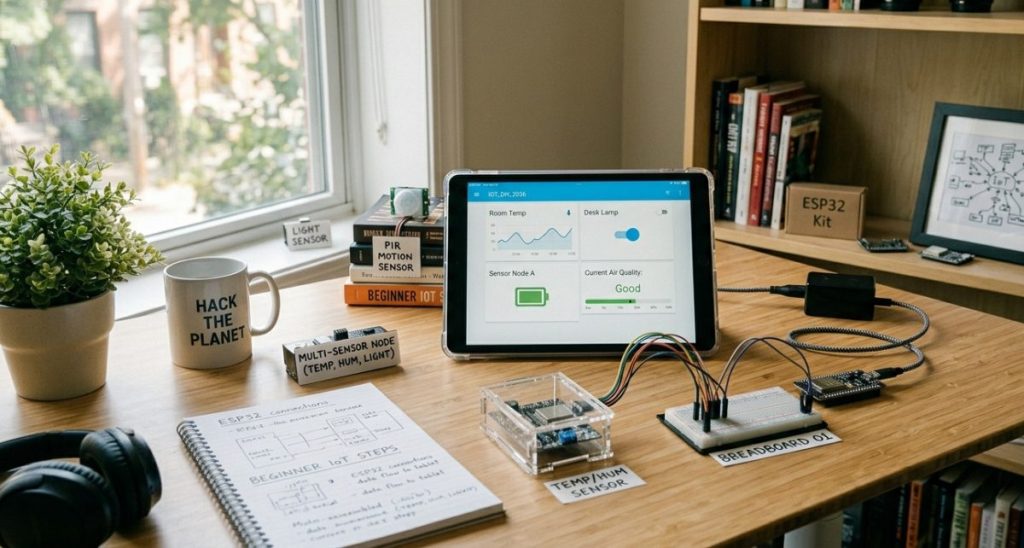
1. Devices (Sensors and Actuators)
Everything starts with the device itself.
These devices include:
- Sensors (collect data)
- Actuators (perform actions)
Examples:
- A temperature sensor measures heat
- A motion sensor detects movement
- A smart plug turns devices on or off
Sensors gather information from the environment, while actuators respond to commands.
2. Connectivity (How Devices Communicate)
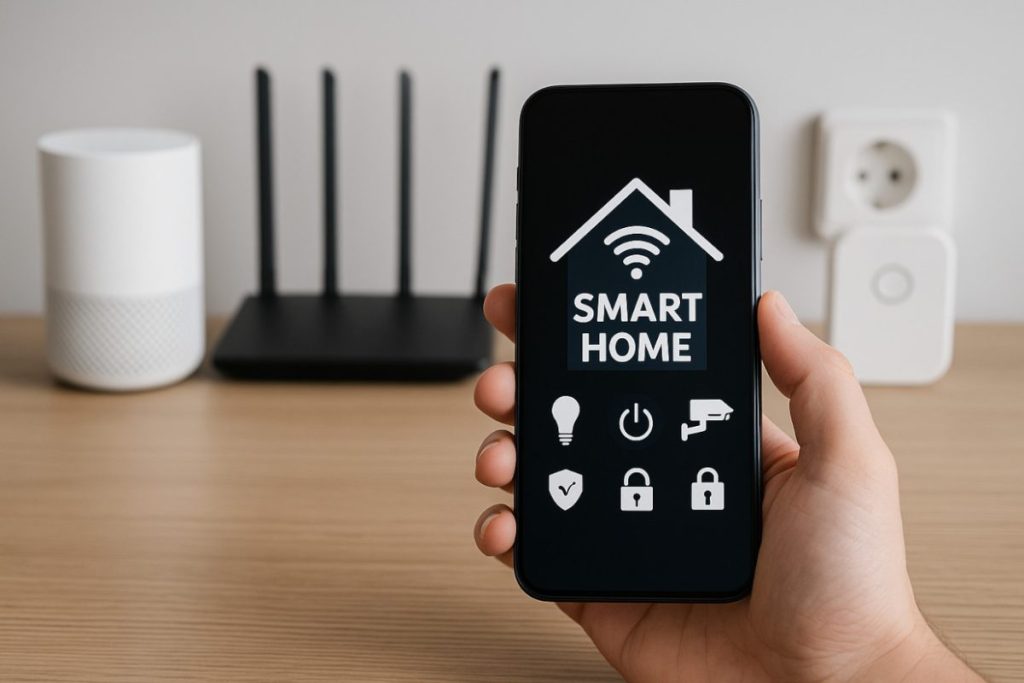
Once data is collected, it needs to be sent somewhere. That’s where connectivity comes in.
Common connection types include:
- Wi-Fi (most common in homes)
- Bluetooth (short-range communication)
- Zigbee (low-power smart home devices)
- LoRa (long-range, low-power industrial use)
Each has its own strengths. For example:
- Wi-Fi is fast but uses more power
- Zigbee is efficient but has shorter range
The choice depends on the use case.
3. Data Processing (Cloud or Edge)
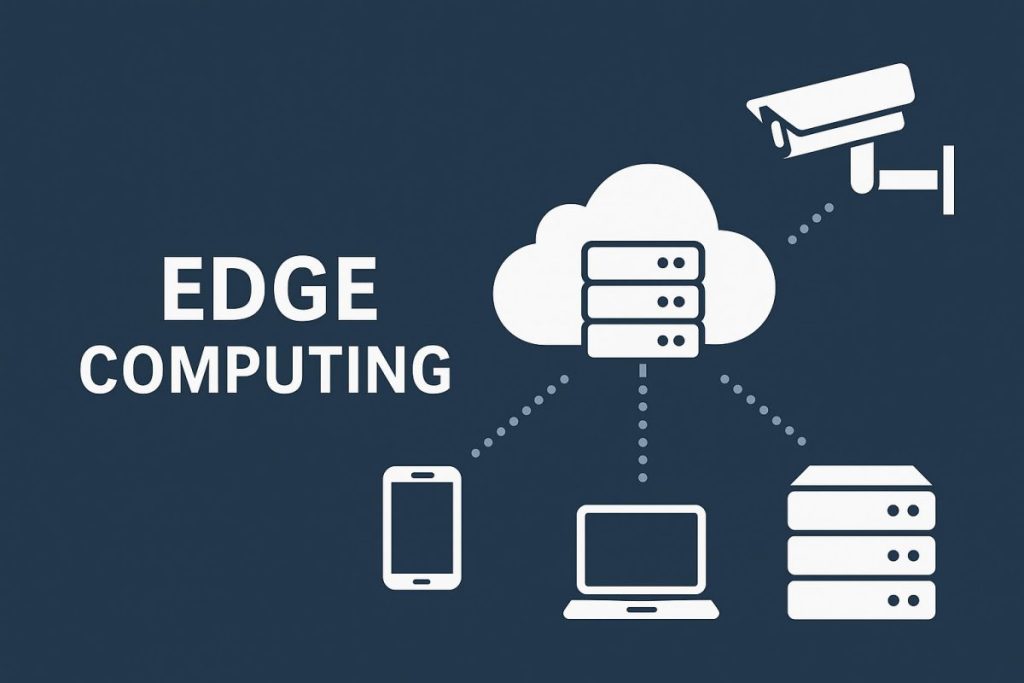
After the data is transmitted, it needs to be processed.
There are two main approaches:
Cloud Processing
- Data is sent to remote servers
- Powerful analysis happens there
- Common in consumer apps
Edge Processing
- Data is processed locally (on the device or nearby)
- Faster response times
- Used in industrial and real-time systems
For example:
A smart thermostat might send data to the cloud to learn your habits, but also make instant adjustments locally.
4. User Interaction (Control and Automation)
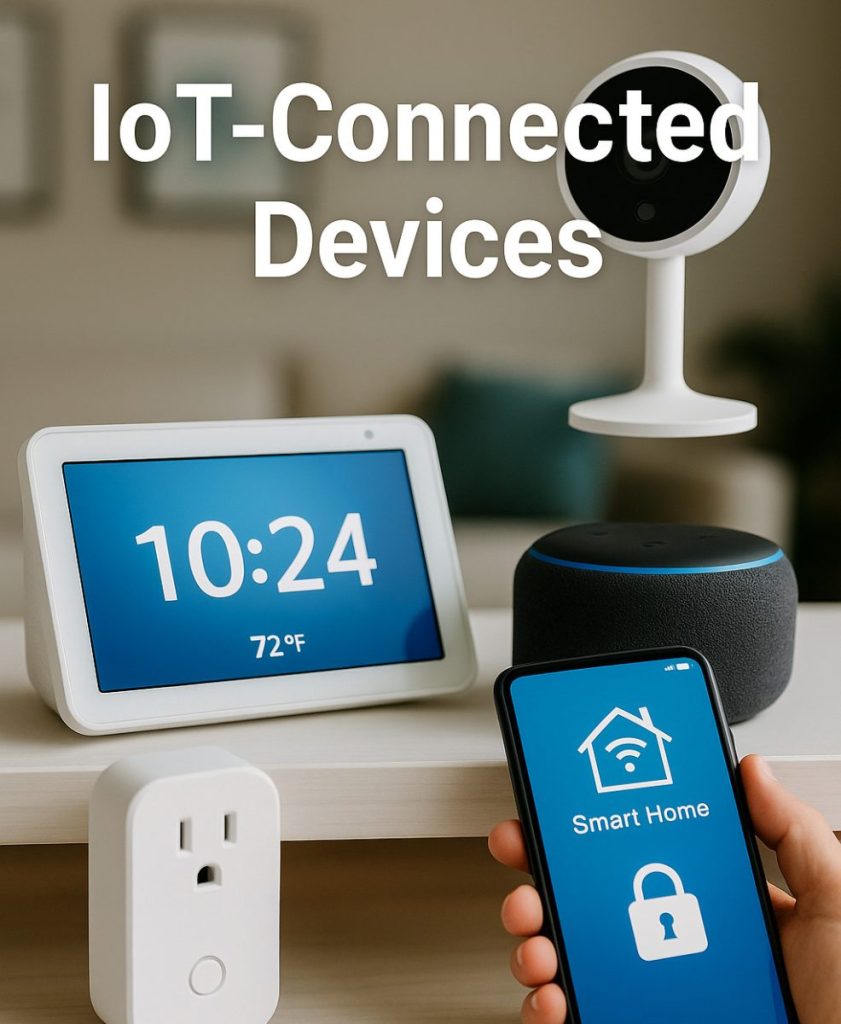
Finally, the system delivers value to the user.
This can happen through:
- Mobile apps
- Dashboards
- Automated rules
Examples:
- You open an app and turn on your lights
- Your system automatically locks doors at night
- A factory system alerts engineers about equipment issues
This is where IoT becomes visible and useful in everyday life.
Real-World IoT Examples
IoT is already everywhere — often in ways people don’t notice. Let’s look at the most common real-world applications.
Smart Homes
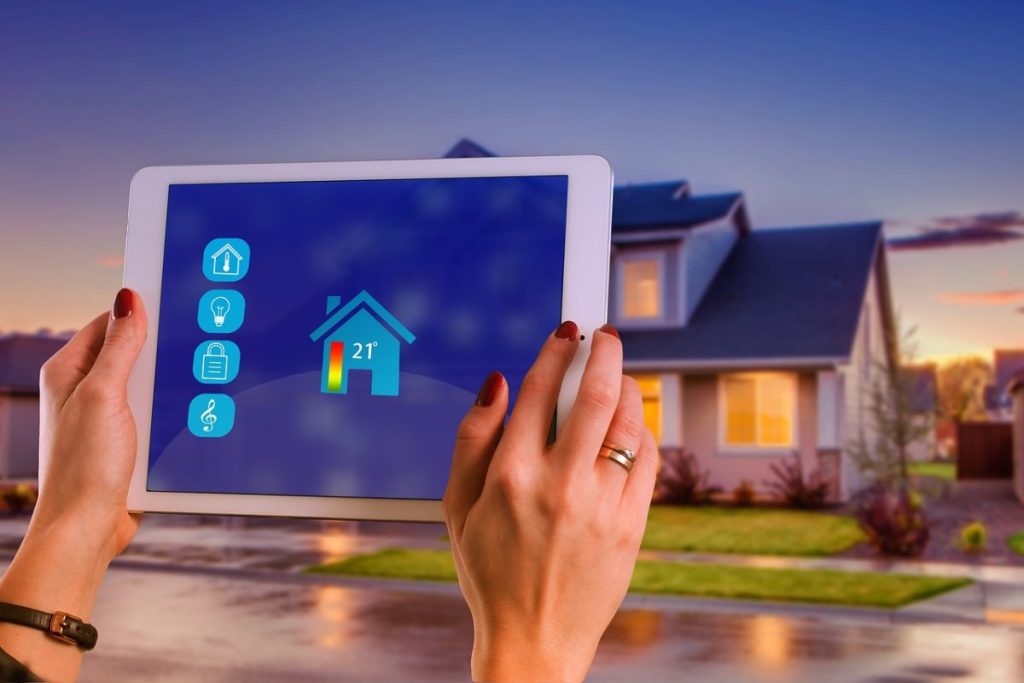
This is the most familiar use of IoT.
Examples include:
- Smart lighting systems
- Smart thermostats
- Security cameras and motion sensors
- Voice-controlled assistants
These devices can:
- Automate daily routines
- Improve energy efficiency
- Increase security
For example:
Lights that turn off automatically when you leave the house aren’t just convenient — they also reduce electricity usage.
Industrial IoT (IIoT)

In industrial environments, IoT plays a critical role.
Examples:
- Machines with sensors that detect wear and tear
- Systems that predict failures before they happen
- Real-time monitoring of production lines
This is known as predictive maintenance, and it saves companies massive amounts of money by preventing downtime.
Connected Vehicles
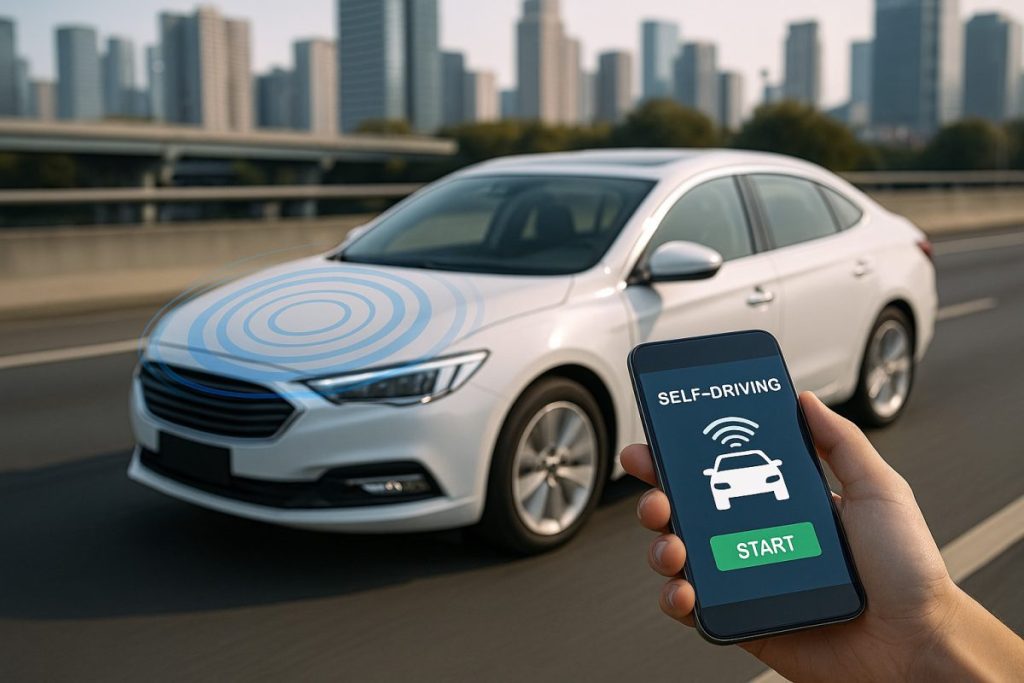
Modern vehicles are essentially IoT devices on wheels.
They can:
- Track location in real time
- Monitor engine performance
- Send maintenance alerts
Fleet companies use this data to:
- Optimize routes
- Reduce fuel consumption
- Improve safety
Healthcare
IoT is also transforming healthcare.
Examples:
- Wearable devices tracking heart rate and activity
- Remote patient monitoring systems
- Smart medical equipment
This allows doctors to monitor patients without needing them to be physically present.
Types of IoT Devices
Not all IoT devices are the same. They fall into different categories depending on where and how they are used.
Consumer IoT
These are devices used by individuals in everyday life.
Examples:
- Smart home devices
- Wearables (fitness trackers, smartwatches)
- Smart appliances
Industrial IoT (IIoT)

Used in manufacturing and heavy industries.
Examples:
- Sensors in machinery
- Industrial automation systems
- Supply chain tracking devices
Commercial IoT
Used in business environments.
Examples:
- Smart retail systems
- Building management systems
- Energy monitoring solutions
Each category has different requirements, especially when it comes to reliability, scalability, and security.
Benefits of IoT
IoT isn’t just about convenience — it delivers real, measurable value.
Automation
Devices can operate without manual input.
Example:
Lights turning on automatically based on motion.
Efficiency
Systems optimize themselves using real-time data.
Example:
Heating systems adjusting based on occupancy.
Cost Savings
Businesses reduce waste and downtime.
Example:
Predictive maintenance preventing expensive failures.
Data-Driven Decisions
IoT provides insights that were previously unavailable.
Example:
Retail stores analyzing customer movement patterns.
Challenges and Risks of IoT
While IoT offers many benefits, it also introduces challenges that shouldn’t be ignored.
Security Risks
Connected devices can be vulnerable to hacking.
Common issues:
- Weak passwords
- Unsecured networks
- Outdated firmware
Privacy Concerns
IoT devices collect a lot of data.
Users need to be aware of:
- What data is collected
- Where it’s stored
- Who has access to it
Compatibility Issues
Not all devices work well together.
Different brands and protocols can lead to:
- Limited integration
- Frustrating user experience
Complexity
Setting up and managing IoT systems can be challenging for beginners.
However, newer platforms are making this easier over time.
IoT Protocols Explained (Quick Overview)
IoT devices rely on different communication protocols.
Here are the most common ones:
- Wi-Fi: High speed, widely used, higher power consumption
- Bluetooth: Short range, low power
- Zigbee: Designed for smart home networks
- LoRa: Long range, low bandwidth, ideal for remote monitoring
Each protocol is optimized for different scenarios.
The Future of IoT (2026 and Beyond)
IoT is evolving rapidly, and its role will only grow.
Key trends include:
AI Integration
IoT systems are becoming smarter by combining with artificial intelligence.
Devices won’t just collect data — they’ll interpret and act on it intelligently.
Smart Cities
Cities are adopting IoT for:
- Traffic management
- Energy efficiency
- Public safety

Increased Automation
From homes to factories, automation will become more advanced and widespread.
Better Interoperability
Devices from different brands are becoming more compatible, improving user experience.
How to Get Started with IoT
If you’re new to IoT, the best approach is to start simple.
Step 1: Start Small
Begin with one device, such as:
- A smart plug
- A smart light bulb
Step 2: Use a Central App
Most devices can be controlled through a single app, making management easier.
Step 3: Experiment with Automation
Try simple rules:
- Turn lights on at sunset
- Switch devices off when you leave home
Step 4: Expand Gradually
Add more devices over time and build your own smart system.
FAQ: Common Questions About IoT
What is IoT in simple terms?
IoT refers to everyday devices connected to the internet that can collect and share data.
What are examples of IoT devices?
Smart lights, thermostats, security cameras, and wearable fitness trackers.
Does IoT require internet access?
Most IoT devices rely on internet connectivity, although some can function locally.
Is IoT safe?
It can be safe if proper security practices are followed, such as using strong passwords and updating devices.
What is the difference between IoT and smart home?
A smart home is a type of IoT application focused on residential environments.
Where IoT Fits Into Your Life
IoT is no longer something reserved for tech enthusiasts or large corporations. It’s already embedded in everyday life, often in subtle but meaningful ways.
From improving comfort at home to optimizing entire industries, IoT is about making systems smarter, more efficient, and more responsive. And as technology continues to evolve, its impact will only grow.
Whether you’re just curious or planning to build your own smart setup, understanding IoT is the first step toward navigating a more connected world.
Linux and the Internet of Things: Powering the Smart Future
More articles for you
- AI Home Companion Robots Are Here: What CES 2026 Revealed About Your Future Living Room
 AI home companion robots stopped being a sci-fi punchline this year. At CES 2026 in Las Vegas, LG showed off a robot with two arms and five-fingered hands folding laundry on stage. Samsung unveiled a full ecosystem of appliances it’s now calling “home companions” instead of appliances. And a startup founded by the co-creator of…
 - On-Device AI in Smart Homes: Why 2026 Is the Year of Local Intelligenceon-device AI – Smart homes are changing fast, and one of the biggest shifts in 2026 is happening inside the devices themselves. Instead of sending every command and camera clip to the cloud, more smart home products are now processing data locally for faster response, better privacy, and more reliable automation. For homeowners, this is…
- Home Assistant for Beginners: Your First Step Away from Big Tech’s Smart HomeHome Assistant for beginners usually starts the same way: frustration. Maybe Google Home dropped a device for no reason. Maybe Alexa started asking for a subscription to use a feature that was free last year. Maybe a smart home brand you trusted announced it was shutting down its cloud servers, turning thousands of dollars of…
- What Data Do Smart Home Devices Collect? (And What Happens to It)What data do smart home devices collect? The honest answer is: far more than most people realise, far more than is necessary for the devices to do their jobs, and in many cases, far more than the average person would be comfortable with if they read the privacy policy in full. 82% of smart home…
- Digital Twins Explained: The Technology That Creates a Living Copy of EverythingDigital twins explained in one sentence: a digital twin is a living, continuously updated virtual replica of a real physical object, system, or process — connected to its real-world counterpart through sensors and data, updating in real time as the physical version changes. That definition is accurate, but it doesn’t quite capture why this technology…